How to Convert Phone Photos to SVG: Mobile Vectorization Guide (2026)
Took a photo of a sketch, logo, or design on your phone? Here's how to turn it into a clean, scalable SVG vector in seconds.
UX Designer & Content Strategist
Sarah brings 6 years of design experience from agencies like IDEO and Frog Design. She specializes in visual design systems and brand optimization.
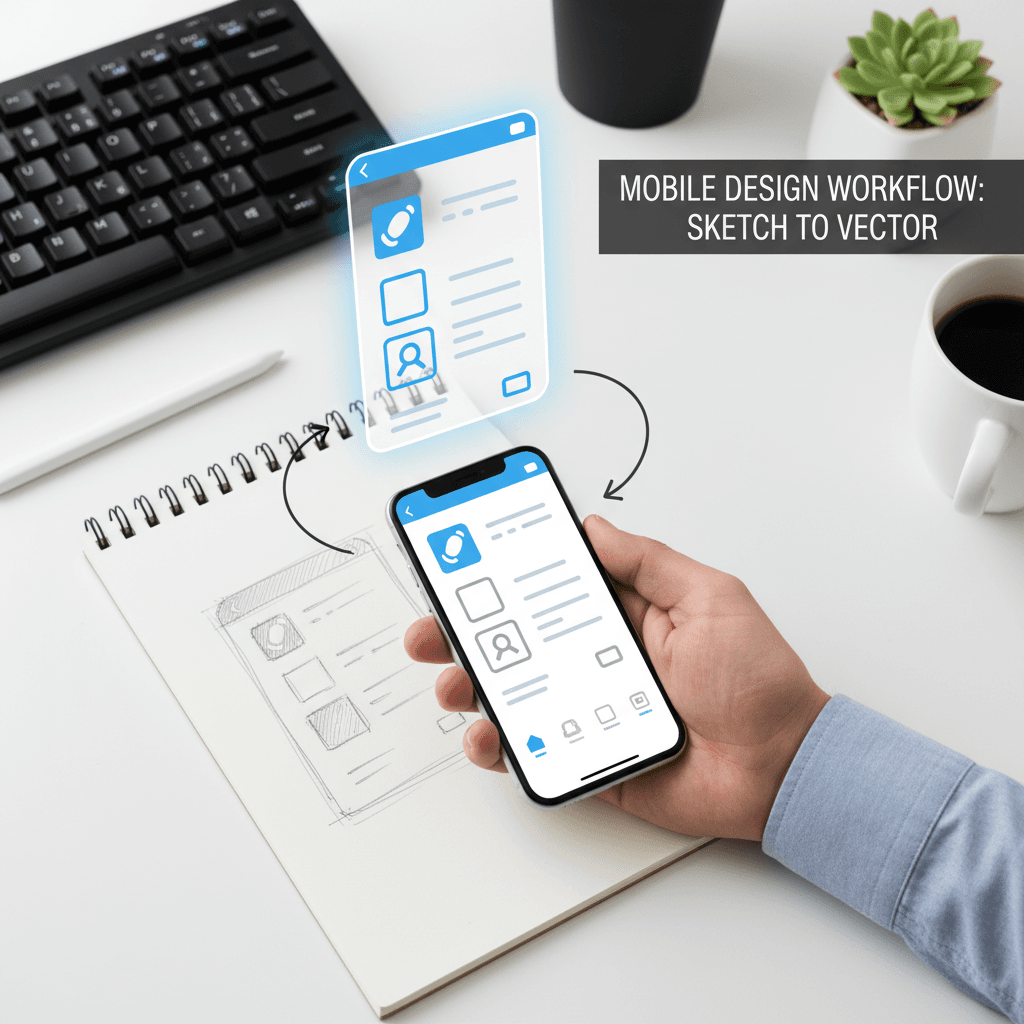
You sketch a logo on a napkin. You spot a design you love on a cafe wall. Your client sends you their logo as a blurry photo from 2015. In every case, the starting point is the same: a photo on your phone. In 2026, you do not need a desktop computer, a scanner, or Adobe Illustrator to turn that photo into a professional vector file. Your phone and VectoSolve are all you need.Your Phone Is a Design Scanner
What You Can Vectorize from Phone Photos
- Hand-drawn sketches and logos — napkin drawings, sketchbook ideas, whiteboard concepts
- Printed logos and business cards — client logos, signage, packaging
- Product labels and packaging — for recreation or redesign
- Text and typography — hand-lettered signs, vintage type, chalkboard menus
- Patterns and textures — fabric patterns, tile designs, wallpaper
- Artwork and illustrations — gallery pieces, street art, murals
How to Take the Perfect Photo for Vectorization
The quality of your vector depends on the quality of your photo. Follow these tips:
Lighting
- Use natural daylight — it gives the most even illumination
- Avoid shadows — hold your phone so your hand does not cast a shadow on the subject
- No flash — flash creates hotspots and uneven exposure
- Diffused light is best — cloudy days or near a window (not direct sunlight)
Angle and Framing
- Shoot straight on — hold your phone parallel to the surface to avoid perspective distortion
- Fill the frame — get as close as possible while keeping the entire design in view
- Use gridlines — enable your phone's grid overlay to keep things level
- Leave a small border — do not crop too tight; VectoSolve can trim the background
Camera Settings
- Maximum resolution — use your phone's full megapixel count
- Tap to focus — tap on the design to ensure it is in sharp focus
- HDR off — HDR can soften edges; turn it off for document/design photos
- Save as HEIC or PNG — avoid heavy JPEG compression if possible
Step-by-Step: Phone to SVG in 60 Seconds
- Take the photo following the tips above
- Open your mobile browser (Safari, Chrome, or any browser)
- Go to vectosolve.com
- Tap "Upload" and select the photo from your camera roll
- Optional: Remove background first — if your photo has a desk, table, or other background behind the design
- Convert to SVG — VectoSolve's AI processes the image and shows you a preview
- Download — save the SVG to your phone or send it directly via email, AirDrop, or cloud storage
iPhone vs Android: Platform Tips
iPhone / iPad
- Use the built-in Document Scanner in the Notes app for flat designs — it auto-corrects perspective and enhances contrast
- ProRAW mode (iPhone 12+) gives maximum detail for vectorization
- AirDrop the SVG to your Mac for further editing if needed
Android
- Google Lens can crop and straighten photos of documents and designs
- Samsung's AI editing tools can enhance contrast before vectorization
- Share SVGs directly to Google Drive for cross-device access
The Chrome Extension Shortcut
If you use Chrome on your phone or desktop, VectoSolve's Chrome extension lets you right-click any image on the web and vectorize it instantly. Perfect for:
- Converting web images to SVG without downloading first
- Vectorizing inspiration images you find online
- Quick-converting social media graphics
Use Cases: What People Vectorize from Phone Photos
Freelance Designers
Client sends a photo of their old logo printed on a business card. You photograph it, vectorize with VectoSolve, and send back a clean SVG — all from your phone during a coffee meeting.
Cricut Crafters
You sketch a design for a custom t-shirt. Photograph the sketch, remove the background, vectorize, and upload the SVG to Cricut Design Space — all from your kitchen table.
Small Business Owners
You need your logo as a vector but only have it on your physical signage. Take a photo, vectorize, and now you have an SVG for your website, social media, and print materials.
Frequently Asked Questions
Do I need a high-end phone for good vectorization?
No. Any smartphone made after 2020 takes photos with enough resolution for vectorization. Higher megapixels help but are not required — good lighting and focus matter more.
Can I vectorize a photo of something that is not flat?
You can try, but flat subjects work best. 3D objects, curved surfaces, and textured materials may not vectorize cleanly. For best results, photograph flat artwork or printed designs.
What if my photo has a shadow or uneven lighting?
Use VectoSolve's background removal to isolate the design from the background. This removes shadows, desk surfaces, and other distractions before vectorization.
Can I batch-convert multiple phone photos?
Yes. Upload multiple photos to VectoSolve and batch convert them all. This is great for digitizing an entire sketchbook or converting a collection of printed logos.
Is it legal to vectorize logos I photograph?
Vectorizing a logo you own or have permission to use is perfectly fine. Vectorizing a trademarked logo for your own use (like your employer's logo) is also typically fine. Do not vectorize someone else's logo to create a knockoff brand.
Your Phone Is All You Need
The days of needing a flatbed scanner and Adobe Illustrator are over. In 2026, your phone camera plus VectoSolve gives you a complete mobile vectorization studio. From sketch to SVG in under a minute.